Artikel: Full Grain, Top Grain or Genuine Leather? A Guide to Choosing a Leather Bag
Full Grain, Top Grain or Genuine Leather? A Guide to Choosing a Leather Bag
Leather has a language of its own.
Full grain. Top grain. Genuine leather. Suede. Corrected leather.
If you’ve ever shopped for a leather handbag and wondered what all those terms actually mean, you’re not alone. They appear everywhere, yet they’re rarely explained in a way that helps you decide which bag is right for you.
And while the type of leather matters, it isn’t the only thing that determines whether a bag is worth owning.
Here’s what you really need to know.
Why Leather Quality Matters
Unlike many synthetic materials, real leather changes over time.
It softens. It develops subtle variations in color. The surface begins to reflect the way the bag has been carried, touched, packed, and used.
That natural aging process is one of the reasons people have loved leather for generations.
But not all leather is processed in the same way. The part of the hide used, how much the surface has been altered, and the finishing process can all affect the leather’s appearance, texture, durability, and price.
Understanding a few basic terms makes choosing your next bag much easier.

What Is Full Grain Leather?
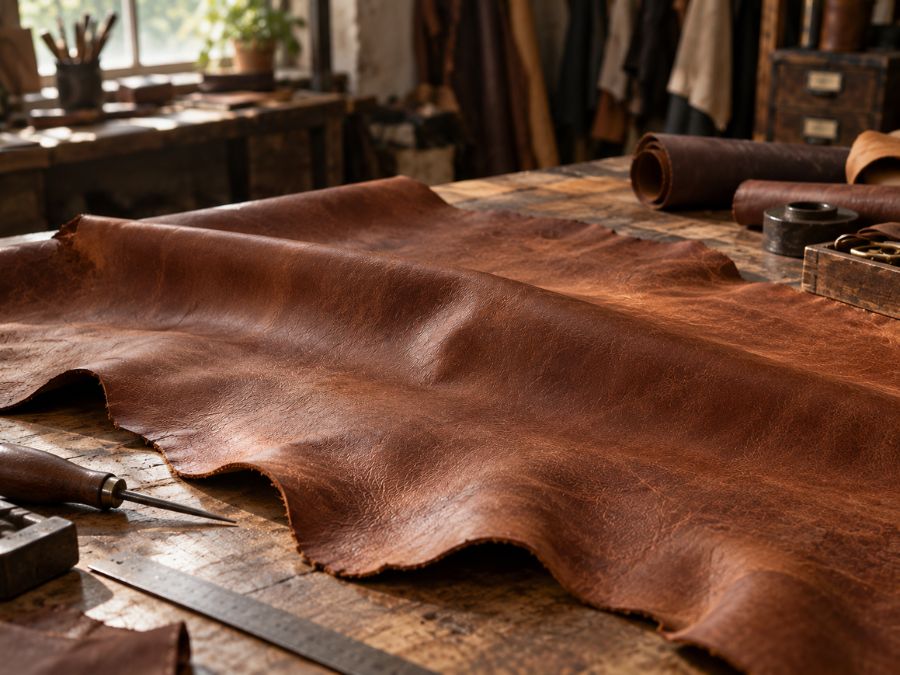
Full grain leather is made from the outermost layer of the hide, with the natural grain left largely intact.
Rather than sanding away the surface to create perfect uniformity, full grain leather retains much of its original character.
That can include subtle variations in texture, grain, small marks, or differences in tone.
And that is exactly the point.
These natural characteristics aren't necessarily imperfections. They are part of what makes each piece of leather individual.
Full grain leather is also known for developing a rich patina over time. Instead of looking exactly the same year after year, the leather gradually takes on a character of its own.
For someone who loves a perfectly uniform finish, that may not always be the goal.
For someone who wants a bag that becomes more personal with age, it can be part of the appeal.
What Is Top Grain Leather?
Top grain leather also comes from the upper portion of the hide, but its surface is typically treated or lightly sanded to create a more consistent appearance.
This removes some natural irregularities and allows manufacturers to achieve a smoother, more uniform finish.
The result can be leather that feels refined, polished, and easier to maintain.
That doesn't make top grain leather “bad” leather.
Far from it.
For handbags, the more consistent surface can actually be desirable, particularly when the design calls for a clean, elegant appearance.
The difference is simply in how much of the hide's natural surface has been preserved.
What Does Genuine Leather Mean?
This is where things can become confusing.
“Genuine leather” means that a product is made with real leather rather than being entirely synthetic. But the term itself does not tell you everything about the leather's grade, finish, thickness, or construction.
In other words, genuine leather is a broad category — not a guarantee that every genuine leather product will look, feel, or age in exactly the same way.
Two bags labeled “genuine leather” can be very different.
That's why it's worth looking beyond a single phrase on the product description.
Consider the texture, construction, lining, hardware, shape, craftsmanship, and — most importantly — whether the bag suits the way you actually live.
Full Grain vs. Top Grain vs. Genuine Leather
The easiest way to understand the difference is this:
Full grain leather retains the natural outer grain of the hide and tends to show more individual character.
Top grain leather has usually been lightly altered to create a smoother and more consistent finish.
Genuine leather confirms that real leather has been used, but it is a broader description and does not by itself identify a specific grade.
None of these terms tells the complete story of a handbag.
A beautiful bag is the result of more than the leather alone.
Its structure, stitching, hardware, proportions, lining, handles, closures, and overall design all matter.
Should Real Leather Look Perfect?
Not necessarily.
One of the most important things to understand about natural leather is that absolute uniformity isn't always a sign of quality.
Real hides can naturally vary.
You may notice subtle differences in grain, texture, or color. Depending on the leather and finish, small creases or natural markings may also be visible.
These characteristics are part of working with a natural material.
Think of wood.
Two pieces cut from the same type of tree will never have exactly the same grain.
Leather is similar.
That individuality is one of the reasons a leather bag can feel so different from something mass-produced from a completely uniform synthetic material.
What Is Patina?
Patina is one of those words you hear often in conversations about leather.
Put simply, patina is the gradual change in the leather's appearance as it ages and is used.
Areas you touch frequently may become smoother. Certain shades can deepen. The surface can develop subtle tonal variations.
Sunlight, natural oils from your hands, moisture, friction, and everyday use can all contribute.
This doesn't happen overnight.
A patina develops gradually — which is exactly what makes it personal.
Your bag begins to reflect your life with it.
Are Scratches on Leather Normal?
Depending on the type and finish of the leather, small surface marks can be completely normal.
Some leathers are more resistant to visible scratches, while softer or more natural finishes can show them more easily.
A tiny mark doesn't automatically mean the leather is poor quality.
In many cases, light marks soften or blend into the surface as the leather is handled and conditioned.
That said, leather still deserves care.
Avoid prolonged exposure to water, extreme heat, harsh cleaning products, and rough surfaces. When you're not using your bag, storing it properly can help preserve its shape and finish.
Leather is durable — but it isn't indestructible.
Does More Expensive Always Mean Better Leather?
No.
Price can reflect many things beyond the raw material: brand positioning, design, hardware, manufacturing, marketing, packaging, retail overhead, and exclusivity.
A famous logo can add considerably to the price of a handbag.
It doesn't necessarily make that bag more suitable for you.
That's why we believe the better question isn't:
“Is this the most expensive bag?”
It's:
“Will I still want to carry this bag years from now?”
A well-chosen leather bag should work with your wardrobe rather than one season's trend.
It should feel appropriate on an ordinary Tuesday as well as on a weekend away.
And ideally, it should become easier to love as it becomes more familiar.
What Should You Look for When Buying a Leather Bag?
Start with your life, not the label.
If you carry a laptop, documents, makeup bag, water bottle, and half your life with you, a beautiful miniature handbag probably isn't going to become your everyday favorite.
A structured tote or roomy shoulder bag may make far more sense.
If you prefer to travel light, a smaller crossbody can give you the freedom you need without unnecessary bulk.
Then look at the details.
Consider whether the straps look comfortable enough for the way you'll carry the bag. Check the closure and interior organization. Think about whether you prefer a structured silhouette or softer leather that relaxes with wear.
Look at the hardware and stitching.
And don't forget weight.
A bag can look wonderful when empty and become frustrating once everything you actually carry is inside it.
Most importantly, choose something that feels like you.
A Leather Bag Doesn't Have to Shout
There is a particular kind of confidence in owning something beautiful without needing everyone else to recognize the logo.
A great leather bag doesn't need to announce its price.
Its appeal can be quieter.
The feel of the leather.
The shape.
The weight of the hardware.
The way it sits beside you at lunch.
The way it works with jeans one day and a dress the next.
The way you reach for it without thinking.
That is the kind of everyday luxury we love.
Choosing a Bag Made to Become Yours
At Atriton, we believe personal style changes as we do.
The bag you wanted ten years ago may not be the bag you want today — and that's perfectly fine.
Perhaps you're looking for fewer things, but better ones.
Perhaps you're moving away from fast trends.
Or perhaps you simply want a beautiful leather bag that feels sophisticated without trying too hard.
Whatever brought you here, understanding leather gives you the freedom to choose based on more than a label.
Full grain, top grain, finish, texture and construction all matter.
But ultimately, the best leather bag is the one that fits your life, your wardrobe, and the person you've become.
Because a new chapter deserves a new bag.